



 vol. 07
Keita SuzukiProfessional
Footballer
vol. 07
Keita SuzukiProfessional
Footballer
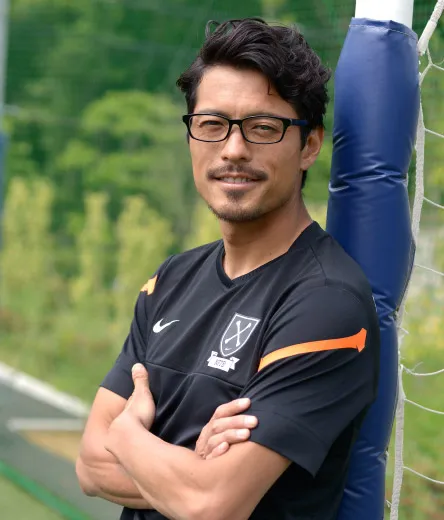
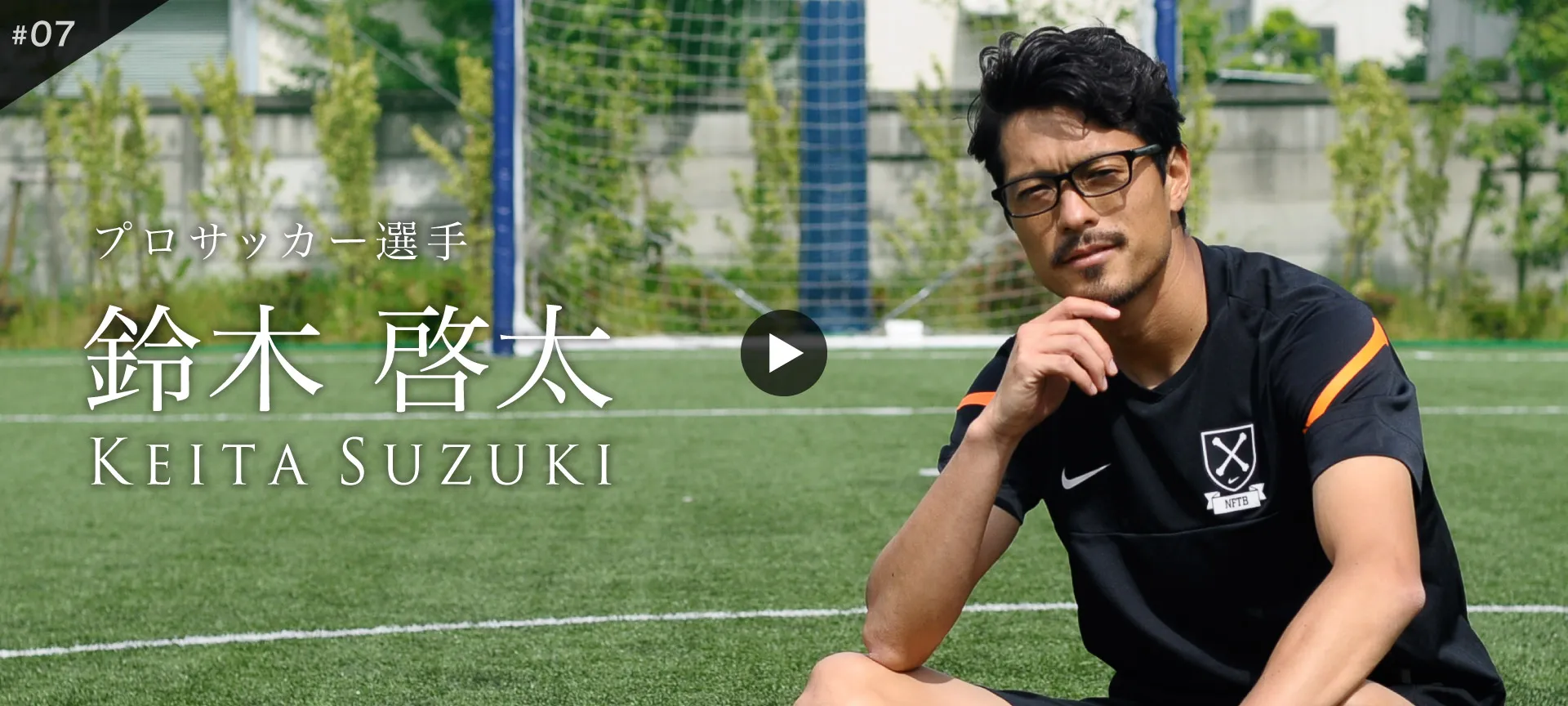
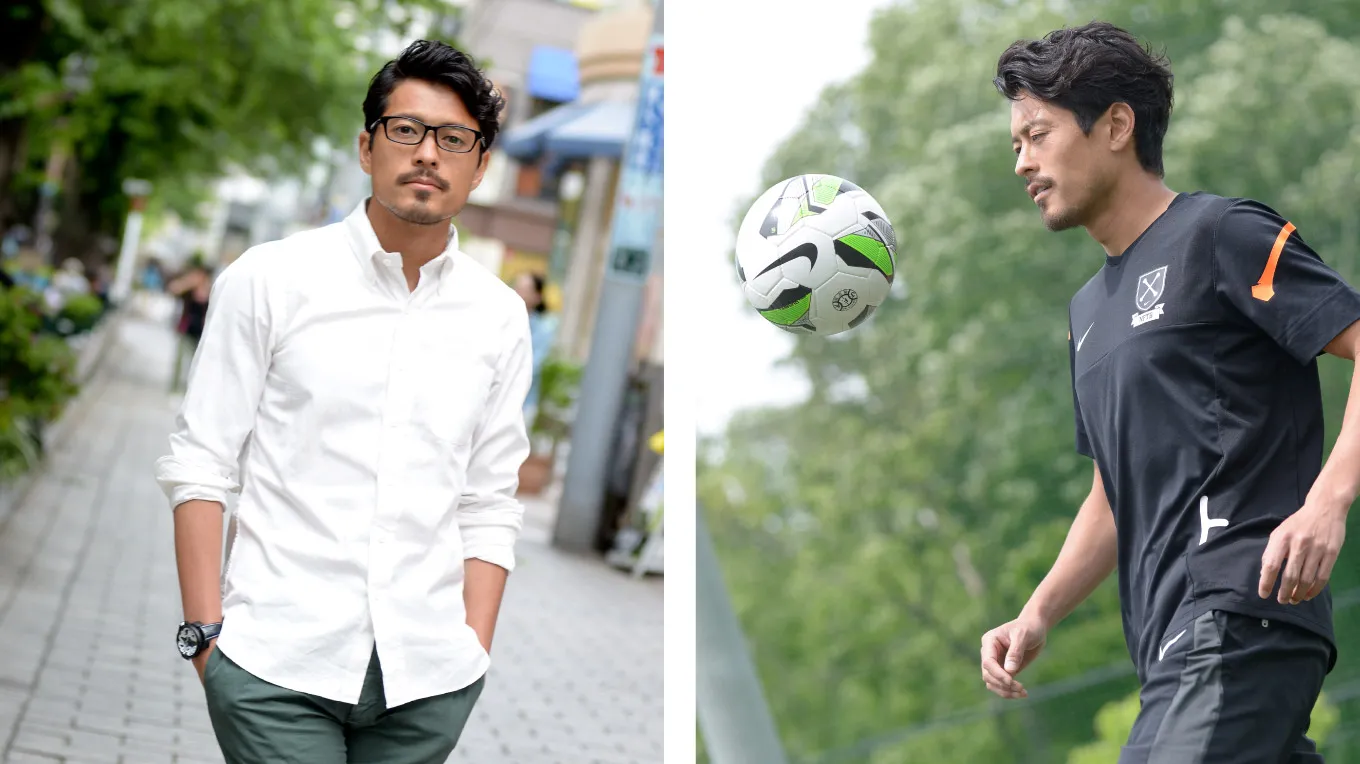
The 7th guest on OWNDAYS MEETS is Keita Suzuki, a professional football player with Japan’s Urawa Red Diamonds and a former Japanese international. Having played for Urawa Reds since he turned professional, he tells us here about his journey through the demanding world of professional football as well as the path he plans to take in the future.
Keita Suzuki
Professional Footballer
Keita Suzuki was born on July 8, 1981 in Shizuoka prefecture,
Japan.
He joined his current team Urawa Red Diamonds in 2000 and is one of the
most prominent defensive midfielders in Japan. With a playing style that brims with
intelligence he is always described as the “heart” with the ability to direct the
whole team.
He has vision and abundant energy, and he uses his ability to spot
danger before anything happens and marshals the perilous space in the middle of the
pitch, helping to bring great success to his team.
Suzuki was selected in the
J-League’s best eleven for two consecutive years in 2006 and 2007, and in 2008 he
was given the Japan Football Writers Player of the Year award.
He captained Urawa
from 2009 to 2011, and has appeared in 28 full international matches for Japan.
So how did you start playing football?
I was born in a place called Shimizu in Shizuoka
prefecture where football is really popular, and many of my friends played so I
just naturally got into it. That was when I was around three years old I
believe. I was also influenced by the manga comic “Captain Tsubasa.”
I used
to play against my friends to practice and improve my skills.
Did you think about become professional from a young age?
Yeah, when I was a kid I had this vague idea of making
a living out of football.
In those days there was still no professional
football league in Japan so I wanted to become a professional overseas, but
after the J-League got underway when I was in the fifth grade or so of
elementary school, I started to really admire the J-League players.
Come to
think of it, I never really thought about becoming anything other than a
professional footballer, and I think the fact that I have made it this far was
because I was determined to do so.
You experienced being a runner-up in a nationwide competition with Shimizu FC and winning a nationwide competition in junior high school, so the road to becoming a pro was pretty smooth, right?
People around me sometimes say that as well, but it
wasn’t as if I was pivotal to the team and I’ve always made efforts thinking it
vital to try and improve myself by playing with prominent players.
Once, when
I was in the first grade of junior high school, five first graders were chosen
to be in the team for a tournament but I wasn’t included and that made me really
frustrated. But I believe the frustration became my motivation, and I started
training every morning after that.
When I entered high school there was a guy
in a higher grade than me who was going to turn pro, and that’s when I started
to think a lot about becoming a professional. But I was left out of the squad on
some occasions so I wasn’t sure about whether I could actually make it or
not.
However, there was no point in thinking negatively, so I decided to just
concentrate on improving as much as I could, and as a result of that I got
scouted when my chance came.
You’ve always played for Urawa since you turned pro, but has there been any change to your role in the team?
Yes. When I became professional I was giving it my all
just to get in the team, and whereas previously I might have sometimes been
playing more for myself, I started to focus on what I could do while I was
playing to ensure the team won.
I took the approach that even if I wasn’t
selected to be in the team I could motivate younger players by the way I
approached the game, but anyway I just began to strongly feel that the team was
the most important thing. I now really want to win a title with the Urawa again,
so I will do everything I can to achieve this.
The World Cup in Brazil starts soon, so what are you looking out for in the tournament?
I’m looking forward to watching Neymar playing for the
host country, and to seeing just how much of a contribution the young players
make.
But the thing I am most interested in is the Japanese team. The squad
contains players who I have played alongside and who I played for Japan with, as
well as those who I’ve played against in J-League games.
Only 23 players can
be selected for the squad and they carry the hopes of many people on their
shoulders, so I hope that those who have been chosen give everything they have
got. The squad contains players who perform at the top level around the world –
Honda, Kagawa, Nagatomo – so I am looking forward to seeing how far they can
take Japan in the tournament.
Tell us about your future goals and any challenges you wish to take on.
First, there is winning the title with Urawa. That’s my
primary goal at the moment. The team is in good shape this season and I want to
give my best to secure victory so that we can celebrate along with our
supporters.
I’m also interested in many other things, but one thing I’d like
to do is use football to pay back all those who supported me. I have gained a
lot from football, as I still do now, and most things in life I have learned
from the game. I want to get involved in something that will allow me to return
this gift to the kids to whom the future belongs and the people around
them.Interview : May 2014
Guest Select SAMURAI BLUE Model

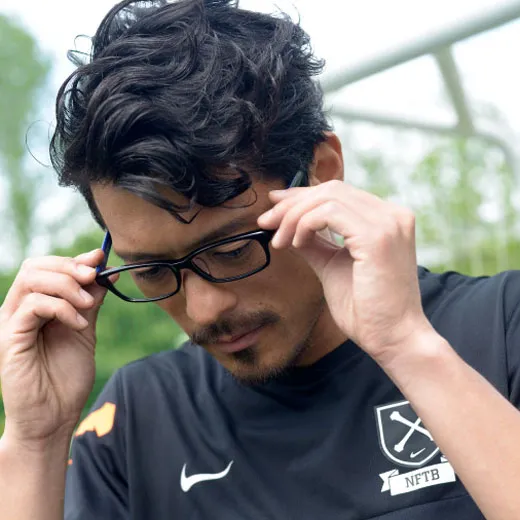
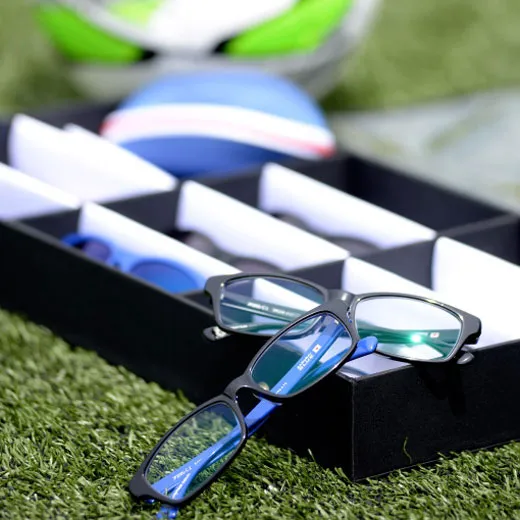
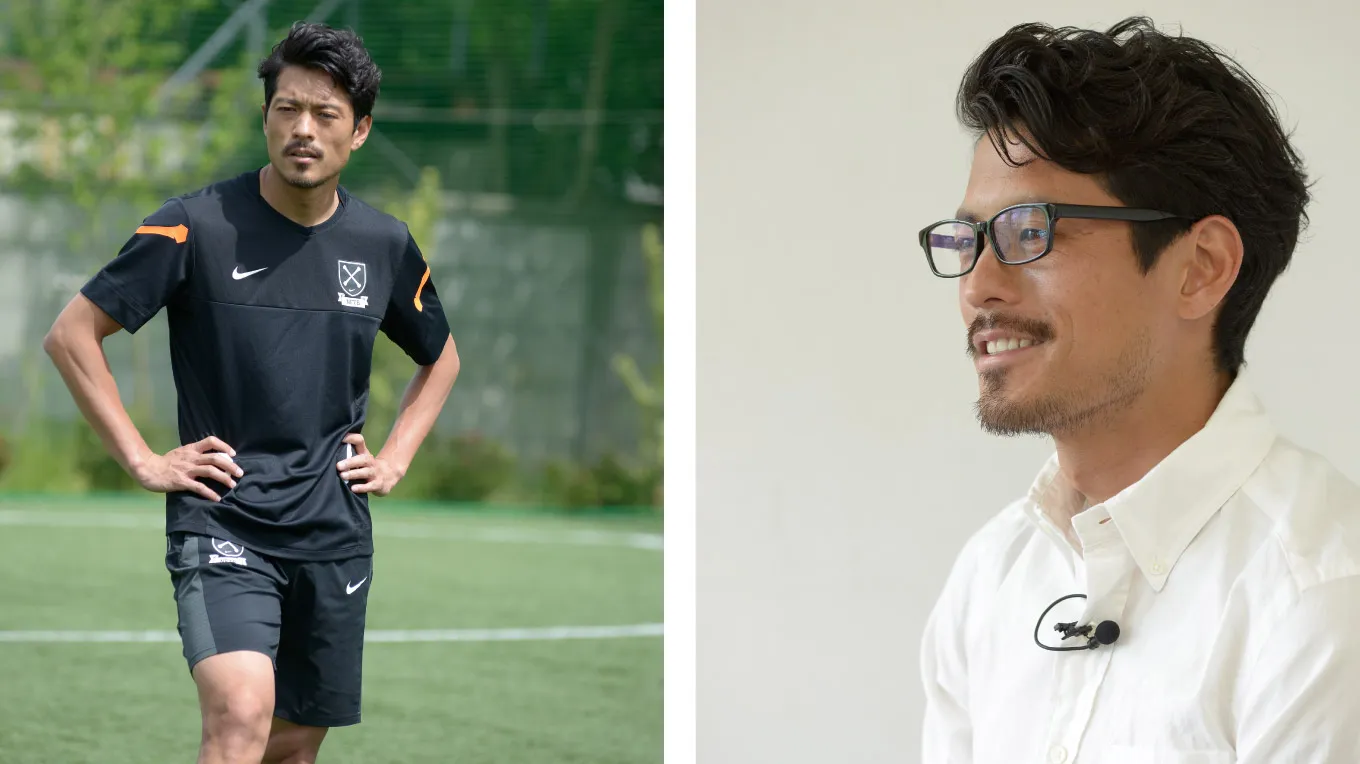
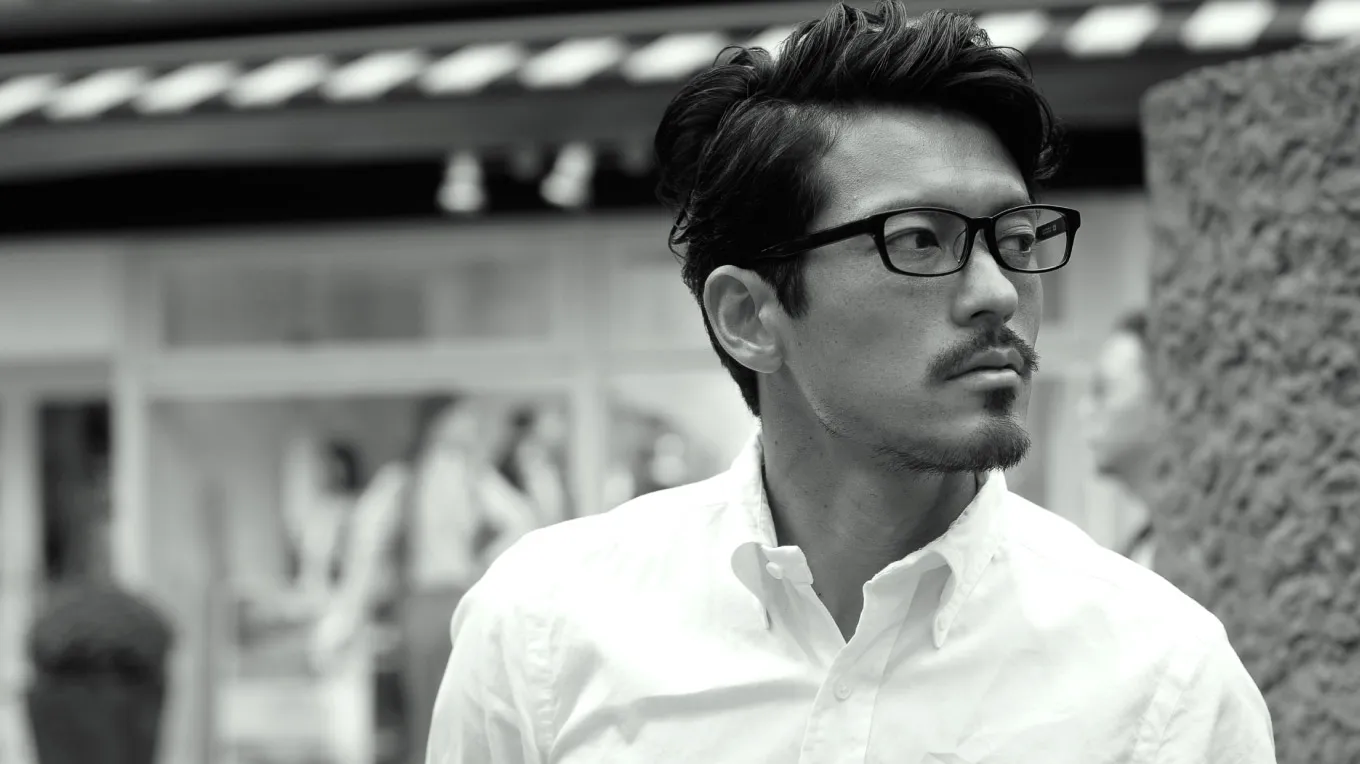
I don’t have good eyesight so I have to wear eyeglasses with corrective lenses, but glasses are also about fashion. I wear black frames, Boston-type glasses, anything that looks good when I put them on really. The design of the glasses I chose today is really good; the outside is black, but the blue that you can see when you look at them from an angle looks really nice. It’s the colour of the Japanese team and is the officially licensed eyewear so it would be good to wear these when I go out in the coming months.
- P/No.
- JP2001
- Colour
- Black/Blue


TOP